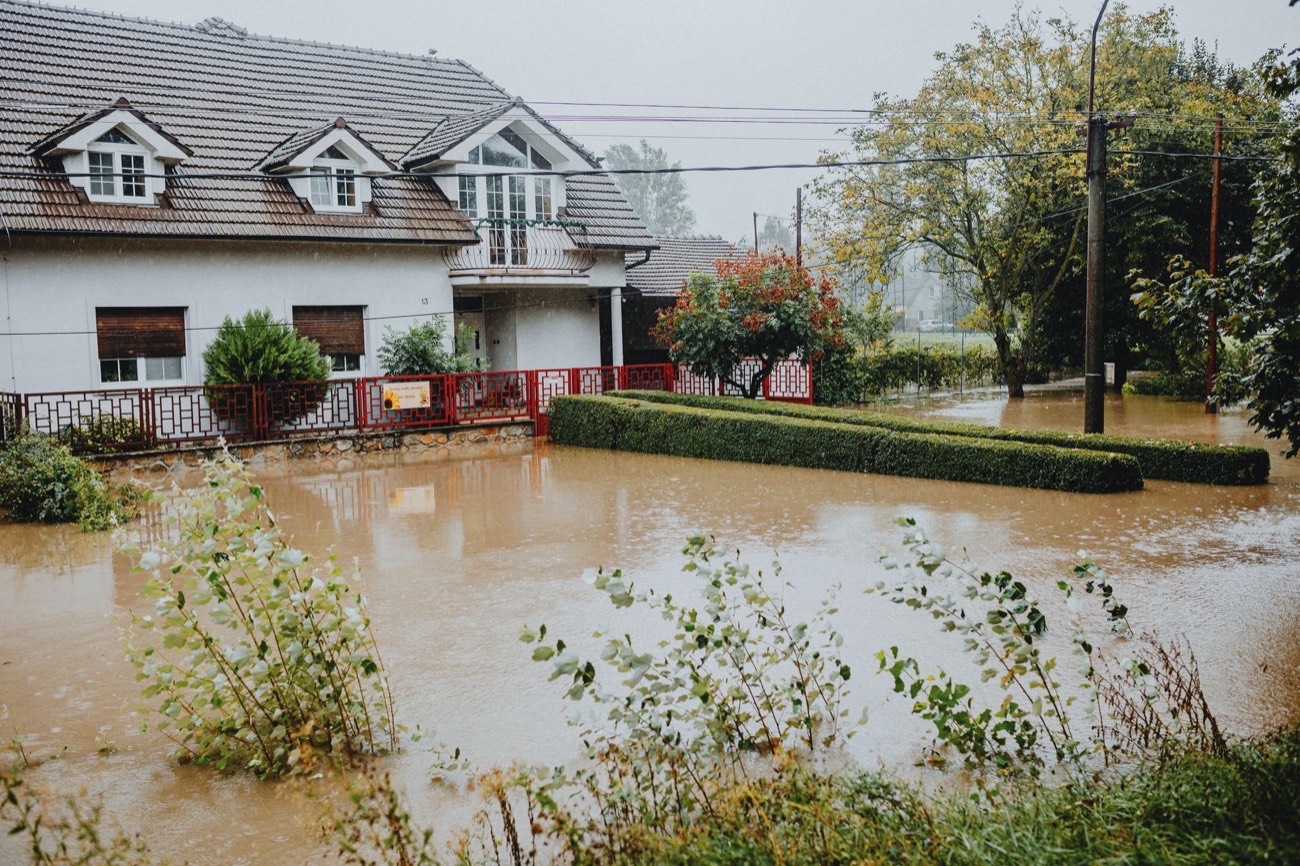
A standard homeowners policy covers sudden, accidental water damage — a burst pipe, an overflowing washing machine, rain through a storm-damaged roof — but it excludes flood damage entirely. Flooding means water that rises from the ground and enters your home: storm surge, an overflowing river, or heavy runoff pooling around the foundation. That water is not covered unless you carry separate flood insurance. This single distinction — where the water came from and which direction it moved — decides whether your claim is paid or denied. It’s also why thousands of homeowners after a hurricane discover, too late, that “water damage” from the storm isn’t the same thing their policy pays for.
The core distinction: source and direction of the water
Insurers separate these two categories by where the water originated and how it reached your home.
- Water damage (often covered): water from inside or above the home. A pipe bursts, a water heater fails, an appliance overflows, or wind tears the roof and rain gets in. The event is sudden and accidental.
- Flood damage (excluded from standard policies): water from outside and below — surface water that rises from the ground up. Storm surge, overflowing lakes or rivers, flash flooding, and mudflow are all “flood” as the industry defines it.
A useful rule of thumb: if the water fell from the sky or leaked from your plumbing and entered through the top or inside of the house, it’s usually water damage. If it rose up off the ground and came in from outside, it’s flood — and your standard policy won’t touch it.
What a standard policy covers vs. excludes
| Scenario | Standard policy | Notes |
|---|---|---|
| Burst or frozen pipe | Usually covered | Sudden and accidental |
| Overflowing appliance (washer, water heater) | Usually covered | Sudden and accidental |
| Rain through a wind-damaged roof | Usually covered | Covered peril (wind) caused the opening |
| Storm surge / rising floodwater | Excluded | Needs flood insurance |
| Overflowing river or lake | Excluded | Needs flood insurance |
| Sewer or drain backup | Excluded unless endorsed | Add a water backup endorsement |
| Slow, long-term leak / seepage | Excluded | Treated as maintenance / wear-and-tear |
| Foundation seepage from groundwater | Excluded | Maintenance / flood territory |
The Texas Department of Insurance lists excluded perils and wear-and-tear / poor maintenance among the most common reasons home claims are denied. Both apply directly here: flooding is an excluded peril, and a slow leak you didn’t fix is treated as maintenance, not a sudden loss.
Why the difference decides your claim
When water damages your home, the cause — not the visible result — determines coverage. Two homes on the same street after the same hurricane can get opposite outcomes:
- Home A: wind tore off shingles, then rain poured in. The covered peril (wind) caused the opening, so the interior water damage is typically covered.
- Home B: the street flooded and water rose into the living room from the ground. That’s a flood, excluded from the standard policy. Without flood insurance, the loss is uninsured.
This is exactly why documentation matters so much. Photograph the water’s entry point, the direction it came from, and any wind damage to the structure. See how to document home damage for a method that stands up during a claim.
How to get covered for flooding
Because standard policies exclude it, flood coverage is a separate purchase:
- National Flood Insurance Program (NFIP): federally backed flood insurance, available in participating communities. There is typically a waiting period before a new policy takes effect, so you cannot buy it as a storm approaches.
- Private flood insurance: offered by some insurers, sometimes with higher limits than the NFIP.
- Water backup endorsement: a low-cost add-on to your regular policy that covers sewer and drain backups — a common loss that is neither standard coverage nor “flood.”
If you live in a flood-prone area and don’t have flood insurance, that gap is the single largest uninsured risk to your home.
What your payout looks like when water damage is covered
When a water loss is covered, the amount you receive still depends on your settlement basis. A replacement cost (RCV) policy pays to repair or replace with like kind and quality without subtracting depreciation; an actual cash value (ACV) policy subtracts depreciation for the age of the damaged materials. For flooring, drywall, and cabinets, that difference can be significant. Read actual cash value vs. replacement cost to understand which one you have and how depreciation is calculated.
If your water claim is denied or underpaid
If your insurer denies a water claim by calling it a flood, or calling a sudden burst “gradual seepage”:
- Get the denial in writing with the exact policy clause cited.
- Gather evidence of the cause — a plumber’s report, the storm date, photos of the entry point and direction of flow.
- Invoke the appraisal clause for disputes over the amount, or file a complaint with your state Department of Insurance for improper handling. The Insurance Information Institute outlines these steps for a claim you’re struggling to settle.
- Consider a professional. For a dispute over how much is owed, a public adjuster can document and negotiate — start with public adjuster vs. attorney to decide which one your situation calls for. A wrongful denial or bad-faith handling is a legal matter for an attorney, not an adjuster.
The takeaway: know before a storm hits that your standard policy stops at the water’s edge. If flooding is a real risk where you live, flood insurance is the only thing that closes the gap.