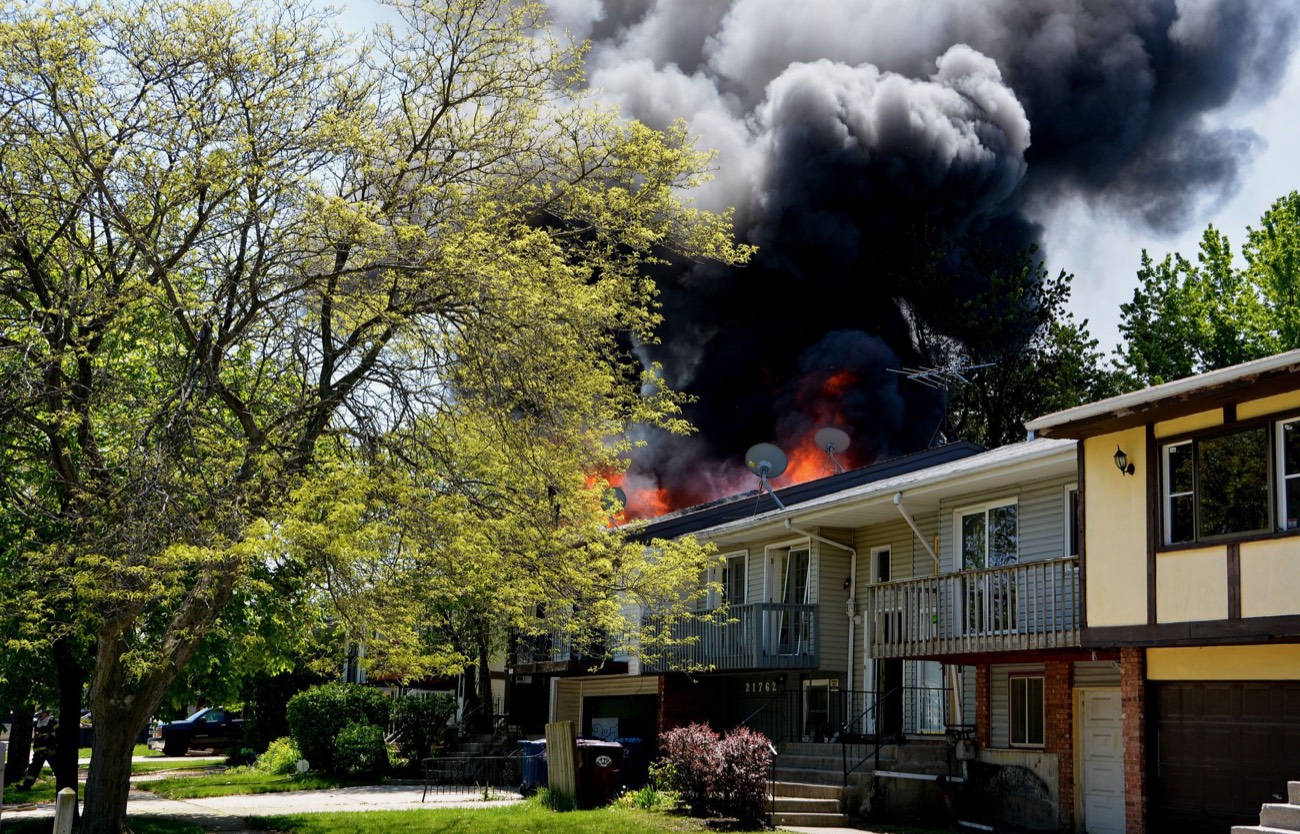
After a house fire, homeowners insurance typically covers three things: the structure, your belongings, and the extra cost of living elsewhere while you rebuild. Fire is a covered peril in nearly every policy, so the challenge isn’t usually whether you’re covered — it’s documenting a large, chaotic loss well enough to be paid fully. That means securing the property, tapping your additional living expenses (ALE) coverage immediately, building a detailed contents inventory, and understanding whether your belongings pay at actual cash value or replacement cost. Major fire claims run one to three months or longer and involve staged payments. This step-by-step guide walks you through recovery in the order it actually happens.
First: safety and immediate steps
Before any paperwork, protect people and property.
- Ensure everyone is safe and don’t re-enter until the fire department clears the home.
- Contact your insurer right away to open the claim — fire claims are urgent and time-sensitive.
- Secure the property. Policies require you to prevent further damage — board up openings, tarp the roof, arrange temporary fencing. Keep the receipts; this is reimbursable mitigation.
- Don’t throw anything away yet. Damaged items are evidence for your contents claim. Document before you discard.
- Start your ALE immediately (below) — you don’t have to wait for the claim to settle to get help with temporary housing.
What a fire policy covers
| Coverage | What it pays for | Watch for |
|---|---|---|
| Dwelling | Repair/rebuild of the structure | Rebuild cost vs. your limit; underinsurance |
| Other structures | Detached garage, fence, shed | Separate sub-limit |
| Personal property (contents) | Belongings damaged or destroyed | ACV vs. RCV; special limits on jewelry, electronics |
| Additional living expenses (ALE) | Extra cost of living elsewhere | Dollar cap and/or time limit |
The two lines that most often shortchange homeowners are the dwelling limit (if your rebuild cost exceeds your coverage, you cover the gap) and the contents basis — read actual cash value vs. replacement cost, because ACV depreciates every belonging and can dramatically cut your payout.
Additional living expenses: use it early
ALE (also called “loss of use”) covers the extra cost of living away from home while it’s uninhabitable — temporary housing, meals above your normal food budget, laundry, pet boarding, extra commuting. Two rules to work by:
- Keep every receipt and a simple log. ALE reimburses documented extra costs, not your entire spending.
- Know the limit. ALE has its own cap and often a time limit. Confirm both early so you can plan housing without blowing through the coverage.
Don’t wait to settle the whole claim before using ALE — it’s there to keep a roof over your head now.
Building your contents inventory
This is the most labor-intensive part and it directly drives your payout. The insurer needs an itemized list of damaged and destroyed belongings.
For each item, record:
- Description (make, model where relevant)
- Approximate age / purchase date
- Original cost and estimated replacement cost
- Photos, if the item or its remains survived
Rebuild the list using any pre-loss home inventory, photos and videos of your home, receipts, and bank and credit card statements. Go room by room so you don’t miss things. This overlaps heavily with general damage documentation — see how to document home damage for method and tools.
Smoke and water damage count too
A fire claim isn’t only about what burned. Two secondary sources of damage are covered and frequently under-claimed:
- Smoke and soot. Smoke permeates far beyond the burned area — into HVAC ducts, insulation, clothing, upholstery, and porous surfaces throughout the house. Soot is corrosive and the odor is persistent, so professional cleaning or replacement of affected items is legitimate and often expensive. Don’t limit your claim to the visibly charred rooms.
- Firefighting water. The water used to extinguish the fire causes its own damage — soaked drywall, flooring, and belongings — and that damage is part of the covered fire loss. It also creates mold risk if not dried quickly, so mitigate and document it just as you would the burn damage.
When you build your inventory and scope, walk the entire home, not just the fire’s origin. A common way homeowners get underpaid is by claiming only the obvious burn zone and overlooking pervasive smoke and water damage that a thorough adjuster (or your own inventory) would capture.
The claim timeline and staged payments
Major fire claims don’t pay in one lump sum. Expect a sequence:
| Stage | What happens | Rough timing |
|---|---|---|
| Report & open | Claim opened, adjuster assigned, ALE begins | Day 1 |
| Inspection & scope | Adjuster assesses structure and cause | First weeks |
| Contents review | Your inventory is reviewed and valued | Weeks |
| Rebuild estimate | Contractor estimates; you may get multiple bids | Weeks |
| Payments | Often ACV first, depreciation released as work completes | 1–3+ months |
For how timelines work across claim types, see how long does a home insurance claim take?
Working with the adjuster and cause investigation
After a significant fire, the insurer will assign an adjuster and may bring in a cause-and-origin investigator to determine how the fire started. This is routine — insurers investigate serious fires as a matter of course — but it can also affect your claim, because certain causes (arson, or in some cases gross negligence) can jeopardize coverage. Cooperate fully and honestly, but understand the process:
- Get the fire department’s report. It’s an independent record of the fire’s cause and is often the most authoritative document in your file.
- Answer questions truthfully and completely. Misstatements or exaggeration can be treated as misrepresentation and used to deny the claim.
- Keep your own parallel record. Note who inspected, when, and what they said, alongside your photos and inventory.
For most accidental fires — kitchen fires, electrical faults, heating equipment — the investigation confirms a covered cause and the claim proceeds normally. Problems arise mainly when the cause is disputed, which is why the fire department’s report and, if needed, an independent expert opinion matter.
Common pitfalls in fire claims
- Underinsured dwelling. If your coverage limit is below the real rebuild cost, you eat the difference. Review your limit annually, ideally before a loss.
- Accepting the first contents number. Insurers may depreciate belongings heavily. A thorough inventory and pushing for replacement cost (if your policy allows) raises the payout.
- Missing the ALE cap. Overspending early can leave you exposed if the rebuild runs long.
- Discarding evidence too soon. Photograph and list items before disposal.
- Cause disputes. If the insurer questions the cause, get the fire department’s report and an independent opinion.
When to get help
Fire claims are large and complex, which makes them worth escalating when they stall or underpay:
- Underpaid but covered? Dispute the amount through the appraisal clause.
- Overwhelmed by the process? A public adjuster can manage documentation and negotiation for a percentage of the settlement — often worth it on a large loss.
- Wrongful denial or bad-faith delay? File a complaint — see how to file a complaint against your insurer.
The bottom line
A house fire is covered — recovery is about documenting a large loss thoroughly and using every part of your coverage. Secure the property, start ALE immediately, build a meticulous contents inventory, confirm your dwelling limit and settlement basis, and expect staged payments over months. When the structure or contents payout falls short, dispute it through appraisal or bring in a public adjuster; when the insurer denies or drags unreasonably, escalate to your Department of Insurance.